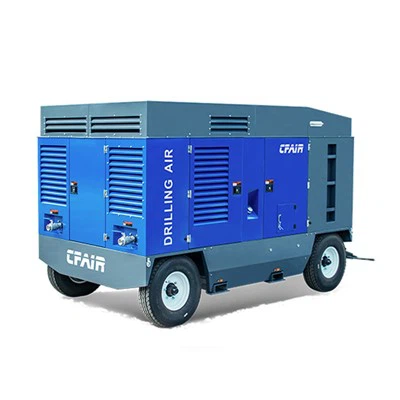
Hey there! As a supplier of screw air compressors, I often get asked about the differences between single - stage and two - stage screw air compressors. Well, let's dive right in and break it down.
1. Basic Working Principles
First off, let's understand how these two types of compressors work. A single - stage screw air compressor has a straightforward setup. It uses a pair of rotors to compress the air in one go. The air gets sucked in, and then the rotors mesh together, reducing the volume of the air and increasing its pressure. It's like taking a big gulp of air and squeezing it all at once.
On the other hand, a two - stage screw air compressor does the job in two steps. In the first stage, the air is compressed to an intermediate pressure. Then, it's sent to a second set of rotors where it gets compressed further to the final desired pressure. It's a bit like pre - squeezing the air before giving it a final, more intense squeeze.
2. Performance in Terms of Pressure
When it comes to pressure, the two - stage screw air compressor has a clear edge. Single - stage compressors are great for applications that don't require extremely high pressures. They usually top out at around 10 - 15 bar. For tasks like running small pneumatic tools in a workshop, a single - stage compressor can do the job just fine.
However, if you need higher pressures, say for industrial applications like powering heavy - duty machinery or for processes in the manufacturing industry, a two - stage compressor is the way to go. It can easily achieve pressures of 15 - 35 bar or even higher in some cases. This ability to generate higher pressures makes it suitable for more demanding jobs. If you're interested in compressors for high - pressure applications, you might want to check out Air Compressors for Sandblasting, which often require higher pressures to work effectively.
3. Energy Efficiency
Energy efficiency is a big deal, especially in today's world where we're all trying to save on costs and be more environmentally friendly. Single - stage screw air compressors are relatively simple in design, which means they have fewer components and generally lower initial costs. But when it comes to energy consumption, they're not as efficient as two - stage compressors.
The reason is that when a single - stage compressor tries to reach higher pressures, it has to work really hard, and this consumes a lot of energy. In contrast, a two - stage compressor distributes the compression process over two stages. This allows it to operate more efficiently, especially when working at higher pressures. By compressing the air in two steps, it reduces the amount of work each stage has to do, which in turn saves energy. So, if you're running your compressor for long hours or have a high - volume air demand, a two - stage compressor can save you a significant amount of money on your energy bills in the long run.
4. Air Quality
Air quality is another important factor to consider. Single - stage compressors tend to heat up the air more during the compression process because they're doing all the compression in one go. This can lead to higher temperatures, which in turn can cause moisture to condense in the compressed air. Moisture in the compressed air can be a problem as it can damage pneumatic tools and equipment, and also affect the quality of the end - product in some manufacturing processes.
Two - stage screw air compressors, on the other hand, have a more controlled compression process. Since the compression is divided into two stages, the air doesn't heat up as much. This results in less moisture in the compressed air, which means better air quality. If you're using the compressed air in applications where air quality is crucial, like in the food and beverage industry or in painting applications, a two - stage compressor is a better choice.
5. Noise Levels
Noise can be a real nuisance, especially in a workplace. Single - stage screw air compressors are generally noisier than two - stage compressors. The high - speed operation and the intense compression in one stage create more vibrations and noise. This can be a problem if you have a small workshop or an environment where noise needs to be kept to a minimum.
Two - stage compressors, with their more balanced compression process, tend to run more smoothly and quietly. They have a lower noise level, which makes them more suitable for indoor use or in areas where noise regulations are strict.
6. Maintenance Requirements
Maintenance is something you can't ignore when it comes to air compressors. Single - stage compressors are simpler in design, so they're generally easier and cheaper to maintain. They have fewer parts that can wear out or break down, which means less time and money spent on maintenance.
However, two - stage compressors, while more complex, are also built to last. They have a more robust design, and because they operate more efficiently, the wear and tear on the components are often less. But they do require more regular maintenance, especially of the two sets of rotors and the intercooler (which is used to cool the air between the two stages). If you're willing to invest a bit more in maintenance, a two - stage compressor can provide reliable service for a long time.
7. Application Suitability
The choice between a single - stage and a two - stage screw air compressor really depends on your specific application. If you're a small business owner with a limited budget and only need to power some light - duty pneumatic tools, a single - stage compressor is a cost - effective option. It's easy to install and operate, and it can meet your basic air demand.


But if you're in an industrial setting, such as a large manufacturing plant or a construction site, a two - stage compressor is likely to be a better fit. For example, in construction, you might need high - pressure air for tasks like driving large jackhammers or operating heavy - duty sandblasting equipment. In manufacturing, you could use it for powering automated machinery or for processes that require high - quality compressed air. You can explore more about compressors suitable for different applications like Diesel Truck Air Compressor and Diesel Compressors on our website.
Conclusion
In conclusion, both single - stage and two - stage screw air compressors have their own advantages and disadvantages. Single - stage compressors are great for small - scale applications, with lower initial costs and simpler maintenance. Two - stage compressors, however, offer better performance in terms of pressure, energy efficiency, air quality, and noise levels, making them ideal for more demanding industrial applications.
If you're still not sure which type of compressor is right for you, don't hesitate to reach out. We're here to help you make the best decision based on your specific needs. Whether you're a small business looking for an affordable solution or an industrial giant in need of high - performance equipment, we've got you covered. Contact us today to start a conversation about your air compressor requirements, and let's find the perfect fit for your business!
References
- Compressed Air and Gas Institute (CAGI) publications on screw air compressors.
- Industry reports on air compressor performance and efficiency.