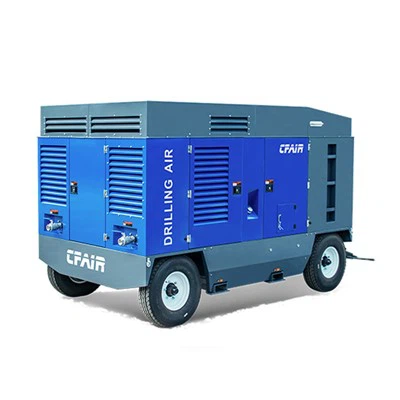
As a supplier of Diesel Driven Compressors, I often get asked about various technical aspects of our products. One question that frequently comes up is: What is the starting torque of a diesel driven compressor? In this blog post, I'll delve into the concept of starting torque, its significance in diesel driven compressors, and how it impacts the performance and operation of these machines.
Understanding Torque
Before we dive into starting torque, let's first understand what torque is in general. Torque is a measure of the force that can cause an object to rotate around an axis. In the context of a diesel driven compressor, torque is what enables the compressor's components, such as the crankshaft and pistons, to start moving and keep the compressor running. It is often compared to the "twisting force" that gets things spinning.
Mathematically, torque (T) is calculated as the product of the force (F) applied and the distance (r) from the axis of rotation at which the force is applied: T = F × r. In a diesel engine, the force is generated by the combustion of fuel in the cylinders, which pushes the pistons down and creates a rotational force on the crankshaft.
Starting Torque Defined
The starting torque of a diesel driven compressor is the torque required to initiate the rotation of the compressor's crankshaft from a stationary position. When you start a diesel engine, it needs to overcome several resistive forces, including the friction in the engine's moving parts, the compression of air in the cylinders, and the initial load on the compressor. The starting torque is the minimum amount of torque needed to overcome these resistive forces and get the engine running.


It's important to note that the starting torque is different from the running torque. Once the engine is running, it only needs to produce enough torque to maintain the rotation of the crankshaft against the ongoing resistive forces, which are generally lower than the initial resistive forces at startup.
Factors Affecting Starting Torque
Several factors can affect the starting torque of a diesel driven compressor:
- Engine Design: The design of the diesel engine plays a crucial role in determining the starting torque. Engines with larger displacement, more cylinders, and higher compression ratios tend to have higher starting torques. For example, a V8 diesel engine will typically have a higher starting torque than a 4-cylinder engine due to its larger size and more cylinders.
- Compressor Load: The load on the compressor at startup also affects the starting torque. If the compressor is connected to a large air tank or has a high-pressure setting, it will require more torque to start. This is because the engine needs to overcome the resistance of the compressed air in the tank or the higher pressure setting.
- Temperature: Cold temperatures can significantly reduce the starting torque of a diesel engine. In cold weather, the oil in the engine becomes thicker, increasing the friction in the moving parts. Additionally, the battery may have reduced capacity, making it harder to start the engine. To combat this, many diesel driven compressors are equipped with glow plugs or block heaters to preheat the engine before starting.
- Fuel Quality: The quality of the fuel used in the diesel engine can also affect the starting torque. Poor-quality fuel may not burn efficiently, resulting in reduced power output and lower starting torque. It's important to use high-quality diesel fuel that meets the manufacturer's specifications.
Importance of Starting Torque
The starting torque of a diesel driven compressor is crucial for several reasons:
- Reliable Startup: A sufficient starting torque ensures that the compressor can start reliably, even under challenging conditions. This is especially important in industrial applications where downtime can be costly. If the starting torque is too low, the engine may fail to start, leading to production delays and increased maintenance costs.
- Load Handling: The starting torque also determines the compressor's ability to handle the initial load. If the starting torque is not enough to overcome the load on the compressor, the engine may stall or run at a lower speed, reducing the compressor's efficiency and performance.
- Longevity of Components: A smooth startup with adequate starting torque helps to reduce wear and tear on the engine's components. When the engine starts smoothly, there is less stress on the pistons, crankshaft, and other moving parts, which can extend the lifespan of the compressor.
Measuring Starting Torque
Measuring the starting torque of a diesel driven compressor can be a complex process. It typically involves using specialized equipment, such as a dynamometer, to measure the torque output of the engine during startup. The dynamometer can provide accurate readings of the starting torque and help identify any issues with the engine's performance.
In some cases, the manufacturer may provide the starting torque specifications for the compressor in the product documentation. These specifications can give you an idea of the compressor's starting capabilities and help you choose the right model for your application.
Our Diesel Driven Compressors
At our company, we understand the importance of starting torque in diesel driven compressors. That's why we design and manufacture our compressors with high-quality engines that provide sufficient starting torque to ensure reliable startup and optimal performance.
Our A Portable Air Compressor is a great example of our commitment to quality and performance. It is equipped with a powerful diesel engine that delivers high starting torque, allowing it to start quickly and easily, even in cold weather. The compressor is also designed to handle heavy loads, making it suitable for a wide range of applications.
Another popular product in our lineup is the Air Compressor Engine Driven. This compressor is built for durability and reliability, with a robust engine that provides excellent starting torque. It is ideal for industrial applications where continuous operation is required.
If you're looking for a compressor with high airflow capacity, our 185 CFM Air Compressor is the perfect choice. It features a high-performance diesel engine that offers sufficient starting torque to handle the large load, ensuring smooth and efficient operation.
Contact Us for Purchase and Consultation
If you're interested in learning more about our diesel driven compressors or have any questions about starting torque or other technical aspects, we'd love to hear from you. Our team of experts is available to provide you with detailed information and help you choose the right compressor for your needs. Whether you're a small business owner or a large industrial enterprise, we have the right solution for you.
Don't hesitate to reach out to us for a consultation. We look forward to working with you and helping you find the perfect diesel driven compressor for your application.
References
- Heywood, J. B. (1988). Internal Combustion Engine Fundamentals. McGraw-Hill.
- Stone, R. (2012). Introduction to Internal Combustion Engines. Pearson Education.
- Taylor, C. F. (1985). The Internal Combustion Engine in Theory and Practice. MIT Press.