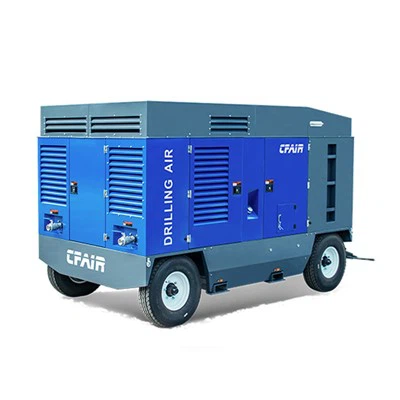
As a box air compressor supplier, I often get asked about the maximum continuous running time of these machines. It's a crucial question, especially for businesses that rely on a steady supply of compressed air. In this blog, I'll break down what affects the continuous running time of a box air compressor and give you a better idea of what to expect.
Understanding Box Air Compressors
First off, let's talk a bit about box air compressors. These are compact, enclosed units that are designed to generate compressed air. They're used in a wide range of applications, from small workshops to large industrial settings. The "box" design helps to reduce noise and protect the internal components from dust and debris.
There are different types of box air compressors, such as High CFM Portable Air Compressor, Diesel Engine Air Compressor, and Truck Mounted Diesel Air Compressor. Each type has its own features and capabilities, which can also impact the maximum continuous running time.
Factors Affecting Continuous Running Time
1. Compressor Type and Design
- Reciprocating Compressors: These are the most common type of box air compressors. They use pistons to compress air. Reciprocating compressors are typically designed for intermittent use. They need time to cool down between cycles to prevent overheating. Depending on the size and design, a reciprocating box air compressor might be able to run continuously for 15 - 30 minutes at a time, followed by a cooling period.
- Rotary Screw Compressors: These compressors use two rotating screws to compress air. They are more suitable for continuous operation compared to reciprocating compressors. A well - maintained and properly sized rotary screw box air compressor can run continuously for long periods, often up to 24 hours a day, 7 days a week. However, this also depends on other factors like load and ambient conditions.
2. Load and Duty Cycle
- The load on the compressor refers to the amount of air it needs to produce. If the compressor is running at a high load, it will generate more heat and may need more frequent breaks. The duty cycle is the ratio of the time the compressor can run to the time it needs to rest. For example, a 50% duty cycle means the compressor can run for half of the total time and needs to rest for the other half.
- If you have a small - scale application with a low air demand, the compressor can operate for longer periods. But if you're using it for heavy - duty tasks like sandblasting or powering large pneumatic tools, the running time will be more limited.
3. Ambient Conditions
- Temperature: High ambient temperatures can make it harder for the compressor to cool down. In hot environments, the compressor may need to run for shorter periods to avoid overheating. For example, if the temperature is above 90°F (32°C), the continuous running time of a reciprocating compressor might be reduced by half.
- Humidity: High humidity can also affect the performance of the compressor. Moisture in the air can cause corrosion and damage to the internal components, reducing the overall lifespan of the compressor and potentially limiting its continuous running time.
4. Maintenance
- Regular maintenance is key to ensuring a long continuous running time. This includes changing the air filters, checking the oil levels (for oil - lubricated compressors), and inspecting the belts and hoses. A well - maintained compressor will run more efficiently and can handle longer periods of continuous operation. If you neglect maintenance, the compressor may overheat or break down more easily, reducing its running time.
Real - World Examples
Let's look at some real - world scenarios to understand how these factors play out.
Small Workshop
In a small workshop, you might be using a High CFM Portable Air Compressor to power nail guns and other small pneumatic tools. The air demand is relatively low, so a reciprocating compressor with a 50% duty cycle might be sufficient. This means you can run the compressor for about 15 - 20 minutes, then let it rest for the same amount of time. Over the course of an hour, you can use the compressed air for 30 minutes.
Industrial Setting
In an industrial setting, a large - scale manufacturing plant might use a Diesel Engine Air Compressor or a truck - mounted diesel air compressor for continuous operation. These compressors are often rotary screw compressors and can run continuously for long periods. If the compressor is properly sized for the load and maintained regularly, it can operate 24/7 with only minor maintenance breaks.
Choosing the Right Compressor for Your Needs
When it comes to selecting a box air compressor, you need to consider your specific requirements. If you need continuous operation for long periods, a rotary screw compressor is usually the better choice. However, if your air demand is intermittent, a reciprocating compressor may be more cost - effective.


Make sure to calculate your air consumption accurately and choose a compressor with an appropriate duty cycle. If you're not sure, our team of experts can help you choose the right compressor for your application.
Contact for Procurement
Are you in the market for a box air compressor? Whether you need a High CFM Portable Air Compressor, Diesel Engine Air Compressor, or Truck Mounted Diesel Air Compressor, we've got you covered. We offer a wide range of high - quality box air compressors and can provide you with all the information you need to make an informed decision. Contact us today to start the procurement process and get the best air compressor for your business.
References
- Air Compressor Handbook, various authors
- Industry reports on air compressor performance and usage