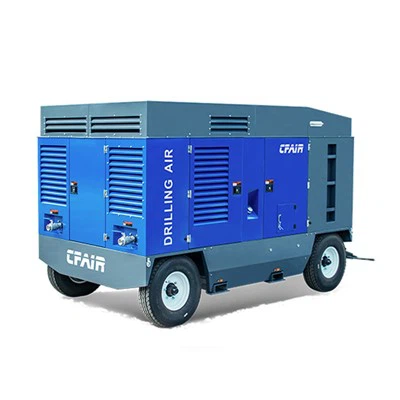
Hey there! As a supplier of Diesel Driven Compressors, I've been getting a lot of questions lately about how compressor speed affects its performance. So, I thought I'd sit down and write this blog to share my insights on this topic.


First off, let's talk about what compressor speed actually means. In simple terms, compressor speed refers to how fast the compressor's components, like the rotors in a Screw Compressors, are rotating. This speed is usually measured in revolutions per minute (RPM). Now, why does this matter? Well, the speed of a compressor has a huge impact on several key performance aspects.
One of the most obvious effects of compressor speed is on the air delivery rate. Generally speaking, the higher the compressor speed, the more air it can deliver. This is because at a higher RPM, the compressor can take in and compress more air in a given amount of time. For example, if you're using a A Portable Air Compressor for a job that requires a large volume of air, like sandblasting or operating pneumatic tools, a higher compressor speed will ensure that you have enough air pressure and flow to get the job done efficiently.
However, it's not all about just cranking up the speed to get more air. There's a balance that needs to be struck. When you increase the compressor speed, you also increase the amount of heat generated during the compression process. This is because the compression of air is a heat-generating process, and the faster the compression happens, the more heat is produced. Excessive heat can be a real problem for compressors. It can cause the lubricating oil to break down more quickly, which can lead to increased wear and tear on the compressor's moving parts. It can also reduce the overall efficiency of the compressor, as more energy is being wasted in the form of heat.
Another important factor to consider is the impact of compressor speed on the compressor's power consumption. As you might expect, a higher compressor speed usually means higher power consumption. This is because more energy is required to drive the compressor at a faster rate. For us as suppliers of Diesel Driven Compressors, this is a crucial consideration. Diesel engines are the power source for these compressors, and fuel efficiency is a major selling point for our customers. If a compressor is running at a very high speed all the time, it will burn through diesel fuel much faster, which can significantly increase the operating costs for the end - user.
On the other hand, running the compressor at too low a speed also has its drawbacks. At low speeds, the air delivery rate will be reduced, which might not be sufficient for many applications. Additionally, the compressor might not be operating at its optimal efficiency. Some compressors are designed to work within a specific speed range, and operating outside of this range can lead to poor performance and increased maintenance requirements.
Let's take a look at High - Power Dual Portable Air Compressors as an example. These compressors are often used in demanding applications where a large volume of high - pressure air is needed. The speed of these compressors needs to be carefully controlled to ensure that they can deliver the required air volume and pressure while also maintaining good fuel efficiency and reliability.
In some cases, variable speed drive (VSD) technology can be a great solution. VSD allows the compressor speed to be adjusted according to the actual air demand. When the demand for air is low, the compressor can run at a lower speed, which reduces power consumption and heat generation. When the demand increases, the speed can be increased to meet the higher air requirements. This not only improves the overall efficiency of the compressor but also extends its service life.
As a supplier, we always recommend that our customers consider their specific application requirements when choosing a compressor speed. If you're using the compressor for light - duty tasks, like inflating tires or powering small pneumatic tools, a lower speed compressor might be sufficient. But if you're working on large - scale construction projects or industrial applications, a higher speed or a compressor with VSD technology might be a better choice.
We also offer a range of services to help our customers optimize the performance of their compressors. Our technical support team can assist with compressor selection, installation, and maintenance. We can also provide training on how to operate the compressors safely and efficiently, including how to adjust the speed settings for different applications.
If you're in the market for a Diesel Driven Compressor and want to learn more about how compressor speed affects performance, or if you have any other questions about our products, we'd love to hear from you. Whether you're a small business owner looking for a reliable A Portable Air Compressor or a large construction company in need of High - Power Dual Portable Air Compressors, we have the expertise and the products to meet your needs. Don't hesitate to reach out to us for a consultation and let's work together to find the perfect compressor solution for you.
References
- Compressor Handbook, Various industry - specific compressor handbooks provide in - depth knowledge on compressor operation and performance factors.
- Diesel Engine and Compressor Technical Manuals, Manufacturer - provided manuals offer detailed information on the relationship between speed and performance for diesel - driven compressors.