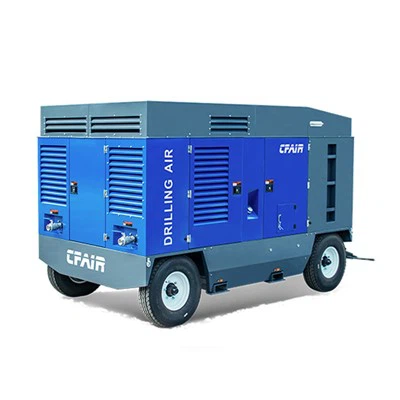
Hey there! As a supplier of compressors for blasting, I've been in the thick of it, dealing with all sorts of questions about what makes the price of these compressors tick. So, I thought I'd break it down for you and share the factors that can really affect the price of a compressor for blasting.
1. Compressor Type
First off, the type of compressor plays a huge role in its price. There are different types out there, like piston compressors, screw compressors, and centrifugal compressors.
Piston compressors are often the more budget - friendly option. They work by using pistons to compress the air. They're relatively simple in design, which means they're usually cheaper to manufacture. However, they might not be as efficient for large - scale blasting operations.
On the other hand, Screw Compressors are a popular choice for blasting. They use two rotating screws to compress the air. These compressors are known for their high efficiency and continuous operation. Because of their advanced technology and better performance, they generally come with a higher price tag. They're great for industrial blasting where you need a consistent and high - volume air supply.
Centrifugal compressors are the heavyweights of the compressor world. They use a high - speed impeller to accelerate the air and then convert the kinetic energy into pressure. These are typically used in very large - scale operations. Their complex design, high - tech components, and high - performance capabilities make them the most expensive type of compressor for blasting.
2. Capacity and Performance
The capacity of a compressor, which is usually measured in cubic feet per minute (CFM) and pounds per square inch (PSI), is another major factor in determining its price.
If you need a compressor with a high CFM rating, it means it can deliver a large volume of air per minute. This is crucial for blasting operations where you need to power multiple blasting guns or use larger - sized nozzles. Compressors with higher CFM ratings require more powerful motors and larger components, which drives up the cost.
Similarly, a compressor with a high PSI rating can provide more pressure. Higher pressure is often needed for more demanding blasting jobs, like removing tough coatings or working on hard surfaces. Compressors that can achieve and maintain high PSI levels are usually more expensive because they need stronger materials and better - engineered components to handle the pressure.
For example, a small - scale blasting operation for a DIY project might only need a compressor with a low CFM and PSI, which can be relatively inexpensive. But for a large industrial blasting project, you'll need a high - capacity compressor that can handle the workload, and that's going to cost you more.
3. Brand and Reputation
You know how it is with brands. A well - known and reputable brand in the compressor industry can charge more for their products. Brands that have been around for a long time and have a good track record of producing high - quality, reliable compressors often have a premium price.


These brands invest a lot in research and development to improve their products' performance, durability, and efficiency. They also have better customer support and after - sales service. When you buy a compressor from a top - notch brand, you're not just paying for the product itself but also for the peace of mind that comes with it.
On the other hand, lesser - known brands might offer compressors at a lower price. However, you need to be careful. Sometimes, the lower price could be due to lower - quality materials or less - reliable manufacturing processes. You might end up spending more in the long run on repairs and replacements if the compressor doesn't hold up well.
4. Energy Efficiency
Energy efficiency is becoming an increasingly important factor in the price of compressors. In today's world, where energy costs are rising and there's a greater focus on sustainability, energy - efficient compressors are in high demand.
Compressors that are designed to use less energy to achieve the same level of performance are generally more expensive upfront. But they can save you a significant amount of money in the long run on your energy bills. These compressors often use advanced technologies like variable - speed drives, which adjust the compressor's speed according to the air demand. This way, they don't waste energy when the full capacity isn't needed.
For example, a Portable Screw Compressor with energy - efficient features might cost more than a standard one, but over time, the savings on energy can more than make up for the higher initial cost.
5. Additional Features and Accessories
The features and accessories that come with a compressor can also affect its price.
Some compressors come with built - in air dryers. These are great for blasting because they remove moisture from the compressed air, which can prevent rusting in the blasting equipment and ensure a better - quality finish on the blasted surface. Compressors with air dryers are more expensive than those without.
Noise - reduction features are another factor. If you're working in an environment where noise is a concern, like a residential area or a workplace with strict noise regulations, a compressor with noise - reducing technology will cost more.
Other accessories like automatic shut - off valves, pressure regulators, and multiple air outlets can also add to the price. These features can make the compressor more convenient and user - friendly, but they do come at a cost.
6. Portability
Portability is a big deal for many blasting operations. A Compressor Portable is great if you need to move the compressor around different job sites.
Portable compressors are designed to be lightweight and easy to transport. They often come with wheels and handles for easy maneuverability. However, the design and engineering required to make a compressor portable can increase its price. The materials used to make it lightweight yet durable also add to the cost.
On the other hand, stationary compressors are usually cheaper. They're designed to be installed in one place and are often larger and more powerful. If you have a fixed blasting location, a stationary compressor might be a more cost - effective option.
So, there you have it! These are the main factors that can affect the price of a compressor for blasting. As a supplier, I understand that finding the right compressor at the right price is crucial for your business. If you're in the market for a compressor for blasting and want to learn more about our products or discuss your specific needs, don't hesitate to reach out. We're here to help you make the best choice for your blasting operations.
References
- Compressor Handbook: A Guide to Compressor Technology and Applications
- Industrial Air Compressor Standards and Best Practices