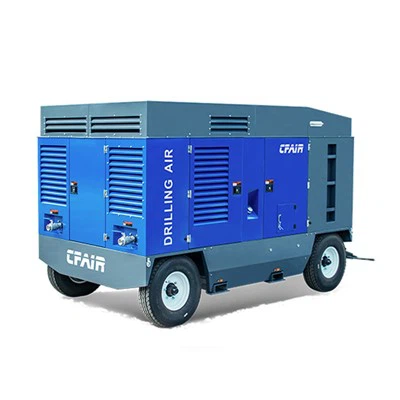
Portable air compressors are incredibly useful tools that come in various types, each designed to meet specific needs. As a supplier of portable air compressors, I've had the opportunity to work with a wide range of these machines and understand their unique features and applications. In this blog, I'll break down the different types of portable air compressors to help you choose the right one for your requirements.
Piston Compressors
Piston compressors are one of the most common types of portable air compressors. They work by using a piston inside a cylinder to compress air. When the piston moves down, it creates a vacuum that draws air into the cylinder. As the piston moves back up, it compresses the air and forces it out through a valve.
These compressors are known for their simplicity and reliability. They're relatively affordable, making them a popular choice for home use, small workshops, and DIY projects. For example, if you need to inflate tires, operate a nail gun for a small carpentry job, or power a paint sprayer for a weekend painting project, a piston compressor can get the job done.
However, piston compressors do have some limitations. They tend to be noisy, and their performance can decrease over time due to wear and tear on the pistons and valves. Also, they're not as efficient as some other types of compressors, especially when it comes to continuous use.
Rotary Screw Compressors
Rotary screw compressors are another popular option, especially for more demanding applications. Unlike piston compressors, which use pistons, rotary screw compressors use two interlocking helical screws to compress air. As the screws rotate, they trap air between them and gradually reduce the volume of the air, increasing its pressure.
One of the main advantages of rotary screw compressors is their efficiency. They can deliver a continuous supply of compressed air, making them ideal for industrial applications where a constant flow of air is required. They're also relatively quiet compared to piston compressors and have a longer lifespan with less maintenance.
If you're running a large workshop, a manufacturing plant, or need to power heavy-duty pneumatic tools, a rotary screw compressor is a great choice. To learn more about Screw Compressors, you can visit our website.
Scroll Compressors
Scroll compressors are a newer type of portable air compressor that offers some unique benefits. They work by using two spiral-shaped scrolls, one fixed and one orbiting. As the orbiting scroll moves around the fixed scroll, it traps and compresses air.
Scroll compressors are known for their quiet operation, making them a great choice for environments where noise is a concern, such as residential areas or offices. They're also very energy-efficient, as they have fewer moving parts compared to piston and rotary screw compressors. This means less friction and less energy wasted.
However, scroll compressors are typically more expensive than piston compressors, and they may not be suitable for high-pressure applications. They're often used for light-duty tasks, such as inflating small objects, powering dental equipment, or operating small pneumatic tools.
Diaphragm Compressors
Diaphragm compressors are a specialized type of portable air compressor that uses a flexible diaphragm to compress air. The diaphragm moves up and down, creating a vacuum on one side to draw in air and then compressing it on the other side.
These compressors are ideal for applications where oil-free air is required, such as in the food and beverage industry, pharmaceuticals, and electronics manufacturing. Since there are no lubricating oils in the compression chamber, there's no risk of oil contamination in the compressed air.
Diaphragm compressors are also relatively compact and lightweight, making them easy to transport. However, they have a lower flow rate compared to other types of compressors, so they're not suitable for high-volume applications.
Large and Heavy-Duty Portable Air Compressors
For some jobs, you need a compressor with a lot of power and capacity. That's where Large Air Compressors come in. These compressors are designed to handle the most demanding tasks, such as powering large pneumatic tools, running multiple tools simultaneously, or supplying air to large industrial processes.


They often have higher horsepower motors, larger tanks, and can deliver a higher volume of compressed air at a higher pressure. If you're working on a construction site, a mining operation, or a large-scale manufacturing facility, a large portable air compressor is essential.
And if you're looking for the ultimate in portable air compressor power, check out our Biggest Portable Air Compressor. It's designed to provide maximum performance and reliability for the toughest jobs.
Choosing the Right Portable Air Compressor
When choosing a portable air compressor, there are several factors to consider. First, think about the specific tasks you'll be using the compressor for. If it's just for occasional home use, a piston compressor or a small scroll compressor may be sufficient. But if you need a compressor for continuous, heavy-duty use, a rotary screw compressor or a large portable air compressor is a better choice.
You also need to consider the pressure and flow rate requirements of your tools or equipment. Different tools require different amounts of air pressure and volume to operate effectively. Make sure the compressor you choose can meet these requirements.
Noise level is another important factor, especially if you'll be using the compressor in a residential area or a noise-sensitive environment. Scroll compressors and some diaphragm compressors are known for their quiet operation.
Finally, consider your budget. Portable air compressors can range in price from a few hundred dollars to several thousand dollars, depending on the type, size, and features. It's important to find a compressor that meets your needs without breaking the bank.
Contact Us for Your Portable Air Compressor Needs
If you're still not sure which type of portable air compressor is right for you, or if you have any questions about our products, don't hesitate to contact us. Our team of experts is here to help you choose the best compressor for your specific requirements. We offer a wide range of high-quality portable air compressors at competitive prices, and we're committed to providing excellent customer service.
Whether you're a homeowner, a small business owner, or an industrial operator, we have the perfect portable air compressor for you. So, get in touch with us today and let's start discussing your air compressor needs.
References
- Compressed Air and Gas Institute (CAGI). "Compressed Air Handbook."
- ASME International. "ASME PTC 9-2006: Performance Test Code on Compressors and Exhausters."