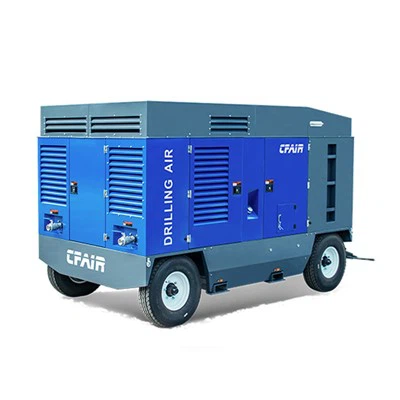
Selecting the right air filter for large air compressors is a critical decision that can significantly impact the performance, efficiency, and longevity of your equipment. As a supplier of large air compressors, I understand the importance of this choice and am here to guide you through the process.
Understanding the Role of Air Filters in Large Air Compressors
Air filters play a crucial role in the operation of large air compressors. Their primary function is to remove contaminants such as dust, dirt, pollen, and other particulate matter from the incoming air. This is essential because these contaminants can cause significant damage to the compressor's internal components, including the cylinders, pistons, valves, and bearings.
When contaminants enter the compressor, they can cause abrasion, wear, and tear on the moving parts, leading to increased friction and heat generation. This not only reduces the efficiency of the compressor but also shortens its lifespan. In addition, contaminated air can also lead to the formation of rust and corrosion inside the compressor, further compromising its performance and reliability.
Moreover, clean air is essential for maintaining the quality of the compressed air output. In many industrial applications, the compressed air is used in processes where even small amounts of contaminants can have a significant impact on the end product. For example, in the food and beverage industry, contaminated compressed air can contaminate the products, leading to quality issues and potential health risks.
Factors to Consider When Selecting an Air Filter
1. Filtration Efficiency
The filtration efficiency of an air filter is perhaps the most important factor to consider. It is measured as the percentage of particles of a specific size that the filter can remove from the air. The higher the filtration efficiency, the better the filter is at removing contaminants.
When choosing an air filter for a large air compressor, it is important to select a filter with a high filtration efficiency for the size of particles that are most likely to be present in the operating environment. For example, if the compressor is operating in a dusty environment, a filter with a high efficiency for removing small dust particles (e.g., 0.3 to 1 micron) would be ideal.
2. Flow Rate
The flow rate of an air filter refers to the volume of air that can pass through the filter per unit of time. It is important to select a filter with a flow rate that is compatible with the capacity of your large air compressor. If the flow rate of the filter is too low, it can restrict the airflow to the compressor, leading to reduced performance and increased energy consumption. On the other hand, if the flow rate is too high, the filter may not provide adequate filtration.
To determine the appropriate flow rate for your compressor, you need to consider the compressor's rated airflow and the operating conditions. In general, it is recommended to choose a filter with a flow rate that is slightly higher than the compressor's rated airflow to ensure optimal performance.
3. Dust Holding Capacity
The dust holding capacity of an air filter refers to the amount of dust and other contaminants that the filter can hold before it needs to be replaced. A filter with a high dust holding capacity can operate for a longer period of time before needing to be changed, reducing maintenance costs and downtime.
When selecting an air filter, it is important to consider the dust loading of the operating environment. If the compressor is operating in a high-dust environment, a filter with a high dust holding capacity would be more suitable.
4. Compatibility with the Compressor
It is essential to ensure that the air filter you select is compatible with your large air compressor. This includes factors such as the size, shape, and mounting method of the filter. Using an incompatible filter can lead to installation issues, reduced performance, and potential damage to the compressor.
Before purchasing an air filter, it is recommended to consult the compressor's manufacturer or a qualified technician to ensure that you select the right filter for your specific compressor model.
5. Cost
Cost is always a consideration when making any purchasing decision. While it may be tempting to choose the cheapest air filter available, it is important to remember that quality and performance are also important. A high-quality air filter may cost more upfront, but it can save you money in the long run by reducing maintenance costs, improving energy efficiency, and extending the lifespan of your compressor.


When comparing the costs of different air filters, it is important to consider the total cost of ownership, including the initial purchase price, replacement frequency, and energy consumption.
Types of Air Filters for Large Air Compressors
1. Fiberglass Filters
Fiberglass filters are one of the most common types of air filters used in large air compressors. They are relatively inexpensive and have a decent filtration efficiency for larger particles (e.g., 5 microns and above). However, their filtration efficiency for smaller particles is relatively low.
Fiberglass filters are typically made of a layer of fiberglass fibers that are held together by a resin. The fibers create a maze-like structure that traps particles as the air passes through. While fiberglass filters are effective at removing larger particles, they may not be suitable for applications where high levels of filtration are required.
2. Pleated Filters
Pleated filters are a more advanced type of air filter that offers higher filtration efficiency than fiberglass filters. They are made of a pleated sheet of filter media that provides a larger surface area for filtration. This allows the filter to capture more particles and have a higher dust holding capacity.
Pleated filters are available in a variety of filtration efficiencies, ranging from low to high. They are suitable for a wide range of applications, including industrial, commercial, and residential. However, they are generally more expensive than fiberglass filters.
3. HEPA Filters
High-Efficiency Particulate Air (HEPA) filters are the most efficient type of air filters available. They are capable of removing at least 99.97% of particles that are 0.3 microns in size or larger. HEPA filters are commonly used in applications where extremely high levels of filtration are required, such as in cleanrooms, hospitals, and laboratories.
While HEPA filters offer excellent filtration performance, they are also the most expensive type of air filter. They also have a relatively low flow rate, which means that they may not be suitable for all large air compressors.
Where to Find the Right Air Filter
As a supplier of large air compressors, we offer a wide range of air filters that are specifically designed for our compressors. Our filters are carefully selected to ensure high filtration efficiency, compatibility, and reliability.
If you are looking for a Diesel Air Compressor, Diesel Mobile Air Compressor, or Air Compressors Portable, we can provide you with the right air filter to meet your needs. Our team of experts can also provide you with professional advice and guidance on selecting the best air filter for your specific application.
Conclusion
Selecting the right air filter for your large air compressor is a crucial decision that can have a significant impact on the performance, efficiency, and longevity of your equipment. By considering factors such as filtration efficiency, flow rate, dust holding capacity, compatibility, and cost, you can choose an air filter that meets your specific needs and requirements.
If you have any questions or need further assistance in selecting the right air filter for your large air compressor, please do not hesitate to contact us. We are here to help you make the best decision for your business.
References
- Compressed Air and Gas Institute (CAGI). Air Compressor Handbook.
- ASHRAE (American Society of Heating, Refrigerating and Air-Conditioning Engineers). Standard 52.2-2017: Method of Testing General Ventilation Air-Cleaning Devices for Removal Efficiency by Particle Size.
- Manufacturer's manuals and technical specifications for large air compressors.