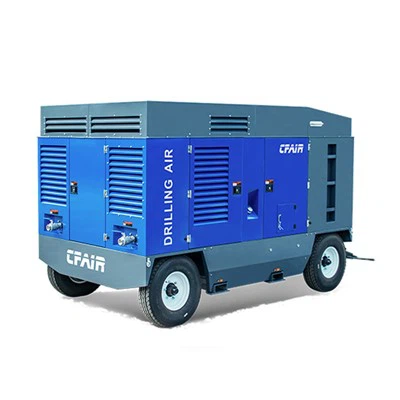
In industrial settings, large air compressors play a pivotal role in powering various operations. A multi - compressor system is often employed to meet the high - volume air demands of large - scale manufacturing, construction, and other industries. However, balancing the load on these large air compressors is crucial for efficient operation, cost - effectiveness, and equipment longevity. As a supplier of large air compressors, I have witnessed firsthand the challenges and solutions associated with load balancing in multi - compressor systems.
Understanding the Basics of Load Balancing in Multi - Compressor Systems
Load balancing in a multi - compressor system refers to the process of distributing the air demand evenly across all the compressors in the system. This is essential because uneven load distribution can lead to several problems. For instance, if one compressor is overloaded while others are underutilized, the overloaded compressor will experience excessive wear and tear, leading to more frequent breakdowns and higher maintenance costs. On the other hand, underutilized compressors are not operating at their optimal efficiency, which means wasted energy and resources.
The first step in load balancing is to understand the capacity and performance characteristics of each compressor in the system. Different compressors have different flow rates, pressure ratings, and power consumption. For example, some large air compressors are designed for high - pressure applications, while others are better suited for high - volume, low - pressure tasks. By knowing these specifications, it becomes possible to assign tasks to each compressor based on its capabilities.
Strategies for Load Balancing
1. Sequential Control
Sequential control is one of the simplest methods of load balancing. In this approach, compressors are started and stopped in a pre - determined sequence as the air demand changes. When the air demand increases, the first compressor in the sequence starts operating. If the demand continues to rise, the second compressor is started, and so on. Conversely, when the demand decreases, the compressors are stopped in the reverse order.
However, sequential control has its limitations. It may not be the most efficient method in situations where the air demand fluctuates rapidly. In such cases, the compressors may be started and stopped too frequently, which can cause additional wear on the equipment and increase energy consumption.
2. Lead - Lag Control
Lead - lag control is a more advanced form of load balancing. In this system, one compressor is designated as the lead compressor, and the others are lag compressors. The lead compressor is responsible for meeting the base air demand. As the demand increases beyond the capacity of the lead compressor, the lag compressors are brought online to assist.
The advantage of lead - lag control is that it allows for more flexibility in responding to changes in air demand. The lead compressor can be selected based on its efficiency at different load levels, and the lag compressors can be used to supplement the lead compressor when needed. This helps to ensure that all compressors are operating closer to their optimal efficiency points.
3. Intelligent Control Systems
With the advancement of technology, intelligent control systems have become increasingly popular for load balancing in multi - compressor systems. These systems use sensors and algorithms to continuously monitor the air demand, compressor performance, and other relevant parameters. Based on this real - time data, the control system can automatically adjust the operation of each compressor to achieve optimal load balancing.
For example, an intelligent control system can detect when a compressor is approaching its maximum capacity and automatically start another compressor before an overload occurs. It can also adjust the speed of variable - speed compressors to match the air demand more precisely, further improving energy efficiency.
Importance of Regular Maintenance in Load Balancing
Regular maintenance is an integral part of load balancing in a multi - compressor system. Well - maintained compressors are more likely to operate at their optimal efficiency, which is essential for effective load distribution. Maintenance tasks include checking and replacing filters, lubricating moving parts, inspecting electrical connections, and monitoring compressor performance.
For example, clogged air filters can restrict the airflow, causing the compressor to work harder to achieve the desired pressure. This can lead to uneven load distribution and increased energy consumption. By regularly replacing the filters, the compressor can operate more efficiently, and the load can be balanced more effectively across the system.
Choosing the Right Compressors for Load Balancing
When setting up a multi - compressor system, it is important to choose the right compressors for the specific application. As a large air compressor supplier, I often recommend a combination of different types of compressors to achieve the best load balancing results.
For example, Portable Screw Compressor are known for their high efficiency and reliability. They are suitable for a wide range of applications, from small - scale workshops to large - scale industrial plants. Their compact design and portability make them easy to install and move around as needed.
Quiet Portable Air Compressor are ideal for environments where noise is a concern, such as hospitals, schools, and residential areas. These compressors are designed to operate quietly without sacrificing performance.
Compressor for Blasting are specifically designed for applications such as sandblasting, painting, and other surface treatment processes. They can provide the high - pressure air required for these tasks, and when integrated into a multi - compressor system, they can help to balance the load more effectively.
Monitoring and Optimization
Continuous monitoring of the multi - compressor system is essential for maintaining proper load balancing. This can be done through the use of monitoring software that tracks key performance indicators such as air flow, pressure, power consumption, and compressor temperature. By analyzing this data, it becomes possible to identify any issues with load distribution and take corrective actions.


For example, if the monitoring software shows that one compressor is consuming significantly more power than the others, it may indicate an imbalance in the load. In such cases, the control system can be adjusted to redistribute the load more evenly.
Conclusion
Balancing the load on large air compressors in a multi - compressor system is a complex but essential task. By understanding the different load - balancing strategies, performing regular maintenance, choosing the right compressors, and implementing continuous monitoring and optimization, it is possible to achieve efficient operation, reduce energy consumption, and extend the lifespan of the equipment.
As a supplier of large air compressors, I am committed to providing our customers with the best solutions for their multi - compressor systems. If you are interested in learning more about load balancing or are looking to purchase large air compressors for your industrial needs, please feel free to contact us for a detailed consultation. We can help you design a customized multi - compressor system that meets your specific requirements and ensures optimal performance.
References
- ASHRAE Handbook - HVAC Systems and Equipment. American Society of Heating, Refrigerating and Air - Conditioning Engineers.
- Compressed Air and Gas Handbook. Ingersoll Rand.
- Industrial Compressed Air Systems: Design, Operation, and Maintenance. McGraw - Hill Professional.