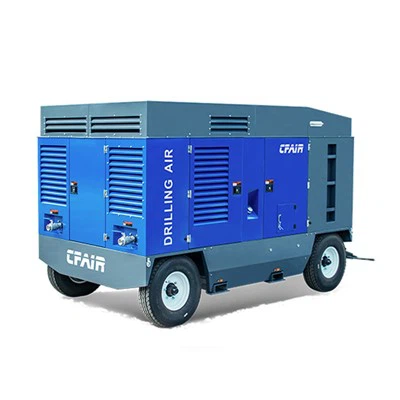
Screw compressors are widely used in various industrial applications due to their efficiency, reliability, and ability to deliver a continuous supply of compressed air. One of the key features of screw compressors is their capacity control system, which allows the compressor to adjust its output to match the changing demand for compressed air. In this blog post, I'll delve into how capacity control works in screw compressors, sharing insights from my experience as a screw compressor supplier.
Basic Principles of Screw Compressors
Before we explore capacity control, it's essential to understand the basic working principles of screw compressors. A screw compressor consists of two rotors - a male rotor and a female rotor - that mesh together inside a housing. As the rotors rotate, air is drawn into the compressor through an inlet port. The air is then trapped between the rotors and the housing and is compressed as the rotors turn. The compressed air is finally discharged through an outlet port.
Importance of Capacity Control
In many industrial processes, the demand for compressed air varies over time. For example, in a manufacturing plant, the air demand may be high during peak production hours and low during breaks or maintenance periods. Without capacity control, a screw compressor would run at full capacity all the time, leading to energy waste and increased operating costs. Capacity control allows the compressor to adjust its output to match the actual demand, resulting in significant energy savings and improved efficiency.
Types of Capacity Control in Screw Compressors
There are several methods of capacity control in screw compressors, each with its own advantages and disadvantages. Here are some of the most common types:
1. On/Off Control
On/Off control is the simplest form of capacity control. In this method, the compressor is either running at full capacity or completely shut off. When the air demand reaches a certain setpoint, the compressor starts up and runs until the demand is met. Once the demand drops below another setpoint, the compressor shuts off. While on/off control is easy to implement and relatively inexpensive, it can lead to frequent starts and stops, which can cause wear and tear on the compressor components and reduce its lifespan.
2. Load/Unload Control
Load/unload control is a more sophisticated form of capacity control than on/off control. In this method, the compressor can operate in two modes: load mode and unload mode. When the air demand is high, the compressor operates in load mode, delivering compressed air at full capacity. When the air demand drops, the compressor switches to unload mode, where it continues to run but does not deliver any compressed air. Instead, the inlet valve closes, and the compressor circulates air internally. Load/unload control reduces the frequency of starts and stops compared to on/off control, resulting in less wear and tear on the compressor components.
3. Modulating Control
Modulating control allows the compressor to continuously adjust its output to match the changing air demand. In this method, the compressor uses a variable-speed drive (VSD) to control the speed of the rotors. As the air demand increases, the VSD increases the rotor speed, resulting in more compressed air being delivered. Conversely, as the air demand decreases, the VSD decreases the rotor speed, reducing the output of the compressor. Modulating control provides the most precise and efficient way of matching the compressor output to the air demand, resulting in significant energy savings.


4. Slide Valve Control
Slide valve control is another method of capacity control commonly used in screw compressors. In this method, a slide valve is installed in the compressor housing. By moving the slide valve, the amount of air that is compressed can be adjusted. When the slide valve is fully open, the compressor operates at full capacity. As the slide valve is closed, the amount of air that is compressed decreases, reducing the output of the compressor. Slide valve control is a relatively simple and reliable method of capacity control, but it may not be as precise as modulating control.
How Capacity Control Systems are Implemented
The implementation of capacity control systems in screw compressors depends on the type of control method used. Here's a general overview of how each method is typically implemented:
On/Off Control
On/Off control is usually implemented using a pressure switch. The pressure switch monitors the pressure in the compressed air system. When the pressure drops below a certain setpoint, the pressure switch sends a signal to the compressor to start. When the pressure reaches another setpoint, the pressure switch sends a signal to the compressor to stop.
Load/Unload Control
Load/unload control is typically implemented using a combination of a pressure switch and an inlet valve. The pressure switch monitors the pressure in the compressed air system. When the pressure drops below a certain setpoint, the pressure switch sends a signal to open the inlet valve, and the compressor operates in load mode. When the pressure reaches another setpoint, the pressure switch sends a signal to close the inlet valve, and the compressor operates in unload mode.
Modulating Control
Modulating control is implemented using a variable-speed drive (VSD). The VSD is connected to the compressor motor and controls the speed of the rotors. A pressure sensor is used to monitor the pressure in the compressed air system. The pressure sensor sends a signal to the VSD, which adjusts the rotor speed based on the air demand.
Slide Valve Control
Slide valve control is implemented using a slide valve actuator. The slide valve actuator is connected to the slide valve and can move the slide valve to adjust the amount of air that is compressed. A pressure sensor is used to monitor the pressure in the compressed air system. The pressure sensor sends a signal to the slide valve actuator, which adjusts the position of the slide valve based on the air demand.
Benefits of Using Capacity Control in Screw Compressors
Using capacity control in screw compressors offers several benefits, including:
Energy Savings
By adjusting the compressor output to match the actual air demand, capacity control can significantly reduce energy consumption. This is particularly important in applications where the air demand varies widely over time.
Extended Equipment Lifespan
Capacity control reduces the frequency of starts and stops and the stress on the compressor components, leading to less wear and tear and an extended equipment lifespan.
Improved System Stability
Capacity control helps to maintain a stable pressure in the compressed air system, which is essential for the proper operation of pneumatic equipment.
Reduced Operating Costs
The energy savings and extended equipment lifespan resulting from capacity control can lead to significant reductions in operating costs over the life of the compressor.
Our Screw Compressors with Advanced Capacity Control
As a screw compressor supplier, we offer a range of screw compressors equipped with advanced capacity control systems. Our Portable Screw Compressor is designed for applications where mobility is required. It features a load/unload control system that allows it to adjust its output to match the changing air demand, resulting in energy savings and improved efficiency.
Our 185 CFM Air Compressor is a high-performance compressor suitable for medium to large-scale industrial applications. It is equipped with a modulating control system using a variable-speed drive (VSD), providing precise and efficient capacity control.
For applications where diesel power is preferred, our Diesel Mobile Air Compressor is an excellent choice. It comes with a slide valve control system that allows for easy adjustment of the compressor output.
Contact Us for Your Compressor Needs
If you're looking for a reliable screw compressor with advanced capacity control features, we're here to help. Our team of experts can assist you in selecting the right compressor for your specific application and provide you with professional installation, maintenance, and after-sales service. Contact us today to start a procurement discussion and find out how our screw compressors can meet your compressed air needs.
References
- "Compressed Air Systems Handbook" by Compressed Air and Gas Institute
- "Screw Compressor Technology" by Ingersoll Rand
- "Industrial Compressed Air Systems: Design, Operation, and Maintenance" by ASHRAE