Hey there! As a supplier of towable air compressors, I often get asked some pretty interesting questions. One of the most unique ones is, "Can a towable air compressor be used underwater?" It's a question that might seem a bit out of the blue, but it's actually quite important for those who have specific needs in wet or underwater environments. So, let's dive right in and explore this topic.
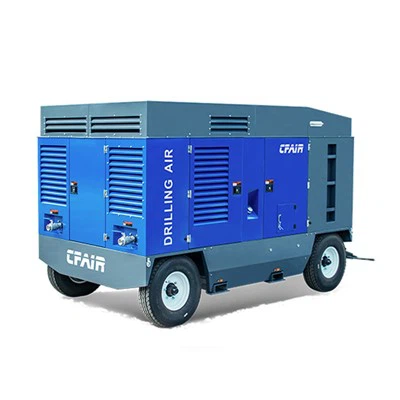
First off, let's understand what a towable air compressor is. These bad boys are designed to be easily transported. You can hitch them up to a vehicle and take them wherever you need them - construction sites, remote areas for mining operations, or even for some heavy - duty agricultural work. They come in different sizes and power sources, like the Diesel Driven Compressor, which is known for its high - power output and reliability in tough conditions.
Now, the big question: using it underwater. The short answer is, generally, no. Towable air compressors are not designed to be submerged. There are several reasons for this.
Electrical and Mechanical Components
Most towable air compressors have electrical components. These include starters, control panels, and sometimes sensors. Water and electricity are a dangerous combination. When water gets into these electrical parts, it can cause short - circuits. A short - circuit not only damages the compressor but can also be a serious safety hazard. It could lead to electrical shocks or even fires.
The mechanical parts of the compressor are also at risk. The internal moving parts, such as pistons, valves, and gears, are lubricated with oil. If water enters the system, it can contaminate the oil. Contaminated oil loses its lubricating properties, which means increased friction between the moving parts. This can lead to premature wear and tear, and eventually, the compressor will break down.
Air Intake and Exhaust
Air compressors need to intake air from the surrounding environment. If the compressor is underwater, it will suck in water instead of air. Water is not compressible like air. When the compressor tries to compress water, it can cause a phenomenon called hydraulic lock. This is when the water fills the compression chamber and prevents the pistons from moving. Hydraulic lock can cause severe damage to the compressor's internal components, including bent connecting rods and cracked cylinders.
On the exhaust side, the compressor expels compressed air. If the compressor is underwater, the exhaust ports can get blocked by water. This can cause a build - up of pressure inside the compressor, leading to burst pipes or damaged valves.
Corrosion
Water, especially saltwater, is highly corrosive. The metal parts of the towable air compressor, such as the tank, pipes, and fittings, are vulnerable to corrosion. Over time, corrosion can weaken the structural integrity of the compressor. It can cause holes in the tank, which will lead to air leaks, and it can also make the pipes brittle and more likely to break.


However, there are some special cases where a modified version of an air compressor can be used in or near water.
Near - Water Applications
If you need to use an air compressor in a wet environment but not fully underwater, there are some precautions you can take. You can use a Quiet Portable Air Compressor and place it on a raised platform or in a waterproof enclosure. This way, it stays dry while still being close to the work area.
For applications like underwater diving, there are specialized underwater air compressors. These are designed to operate in wet conditions. They have sealed electrical components, corrosion - resistant materials, and special air intake and exhaust systems to prevent water from entering the compressor. But these are not the same as the towable air compressors we supply.
Alternatives for Underwater Use
If you have an underwater project that requires compressed air, there are alternatives. You can use a surface - supplied air system. In this setup, a regular towable air compressor is placed on the surface. It compresses air and sends it through a long hose to the underwater work area. This way, the compressor stays dry and safe, while the compressed air still reaches the underwater location.
Another option is to use a Compressor Portable in combination with a dry - suit inflation system for divers. The compressor can be used to fill small air tanks, which are then used to inflate the dry - suits. This is a safer and more practical way to use compressed air in underwater scenarios without submerging the compressor.
In conclusion, while our towable air compressors are great for a wide range of above - water applications, they are not suitable for underwater use. Trying to use them underwater can lead to costly damage and safety risks. But don't worry, there are still plenty of ways to get the compressed air you need in wet or underwater environments.
If you're in the market for a towable air compressor for your above - water projects, we've got you covered. We offer a wide range of high - quality towable air compressors with different power ratings and features. Whether you need a small, Quiet Portable Air Compressor for light - duty work or a powerful Diesel Driven Compressor for heavy - duty tasks, we have the right solution for you.
If you have any questions or want to discuss your specific needs, feel free to reach out. We're here to help you find the perfect compressor for your project.
References
- Compressor Handbook, McGraw - Hill
- Industrial Air Compressor Maintenance Guide, ASME Press