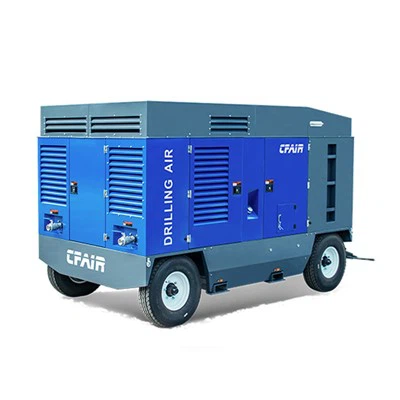
Hey there! As a supplier of Diesel Driven Compressors, I've gotten a ton of questions about the different parts and functions of these machines. One component that often gets overlooked but is super important is the separator in a diesel driven compressor. So, let's dive in and talk about what it does.


First off, let's understand the basic idea of a diesel driven compressor. These bad boys are used in a whole bunch of industries, from construction to mining. They work by using a diesel engine to power a compressor that takes in air, squeezes it down, and then spits it out at a higher pressure. This high - pressure air can be used for all sorts of things, like powering pneumatic tools or inflating tires.
Now, the separator in a diesel driven compressor plays a crucial role in the whole process. There are mainly two types of separators we're concerned with: the air - oil separator and the moisture separator.
Let's start with the air - oil separator. In a diesel driven compressor, the compressor oil is used to lubricate the moving parts, cool the air during compression, and seal the gaps between the compressor components. But when the compressed air leaves the compressor, it usually has a fair amount of oil mixed in with it. That's where the air - oil separator comes in.
The air - oil separator is designed to separate the oil from the compressed air. It works by using a combination of mechanical and filtration methods. When the oil - laden compressed air enters the separator, it first goes through a series of baffles or chambers. These baffles slow down the air and cause the larger oil droplets to fall out of the air stream due to gravity. After that, the air passes through a fine - mesh filter element. This filter traps the remaining tiny oil droplets, allowing only clean, oil - free air to pass through.
Why is this so important? Well, if the compressed air still has oil in it when it's used to power pneumatic tools, it can cause all sorts of problems. The oil can contaminate the tools, leading to reduced performance and a shorter lifespan. In some industries, like food and beverage or pharmaceuticals, having oil in the compressed air is a big no - no because it can contaminate the products. So, a good air - oil separator ensures that the compressed air is clean and suitable for use in a wide range of applications.
Next up is the moisture separator. Compressing air raises its temperature, and when this hot, compressed air cools down, the water vapor in it condenses into liquid water. If this water isn't removed, it can cause corrosion in the compressor system, damage pneumatic tools, and even affect the quality of the end - product in some manufacturing processes.
The moisture separator is responsible for removing this condensed water from the compressed air. There are different types of moisture separators, but a common one is the centrifugal separator. In a centrifugal moisture separator, the compressed air enters the separator at high speed and is made to spin around a central axis. The centrifugal force throws the heavier water droplets to the outer walls of the separator, where they collect and drain out through a drain valve.
Some moisture separators also use coalescing filters. These filters work by causing the tiny water droplets to combine or "coalesce" into larger droplets, which then fall out of the air stream more easily. By removing the moisture from the compressed air, the moisture separator helps to protect the compressor system and the equipment that uses the compressed air.
Now, let's talk about how these separators impact the overall performance and efficiency of a diesel driven compressor. A well - functioning separator means that the compressor can operate more smoothly. When the air - oil separator is working properly, the compressor oil can be reused, which reduces the need for frequent oil changes. This not only saves money on oil but also reduces the environmental impact.
Similarly, a good moisture separator prevents water damage to the compressor components. Water can cause rust and corrosion, which can lead to leaks, reduced efficiency, and costly repairs. By keeping the compressed air dry, the moisture separator helps to extend the lifespan of the compressor and other equipment in the system.
At our company, we offer a wide range of diesel driven compressors, including Towable Diesel Air Compressor, Screw Compressors, and 185 CFM Air Compressor. All of our compressors are equipped with high - quality separators to ensure optimal performance.
If you're in the market for a diesel driven compressor, it's important to pay attention to the quality of the separators. A cheap or poorly - designed separator can lead to all sorts of problems down the line. Make sure to choose a compressor from a reputable supplier who uses top - notch separators.
In conclusion, the separator in a diesel driven compressor is a vital component that shouldn't be overlooked. Whether it's the air - oil separator or the moisture separator, these parts play a key role in ensuring that the compressed air is clean, dry, and suitable for use in a variety of applications. They also help to improve the performance, efficiency, and lifespan of the compressor system.
If you have any questions about our diesel driven compressors or the separators in them, don't hesitate to reach out. We're here to help you find the right compressor for your needs and answer any technical questions you might have. Let's start a conversation about your next compressor purchase!
References
- Compressed Air Handbook by Ingersoll Rand
- Air Compressor Technology by Kaeser Compressors