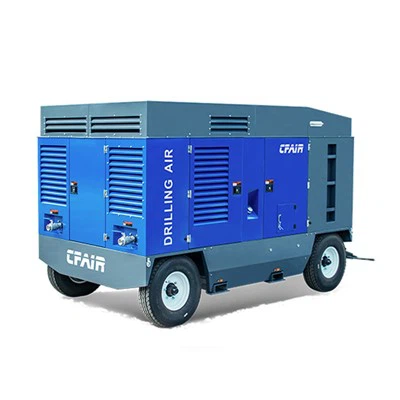
When it comes to mobile air compressors, one of the key decisions you'll face is whether to choose a belt - driven or a direct - driven model. As a seasoned supplier of mobile air compressors, I've seen firsthand the advantages and disadvantages of each type, and I'm here to break down the differences for you.
1. Working Principle
Let's start with the basics: the working principle. A belt - driven mobile air compressor uses a belt to transfer power from the engine to the compressor pump. The engine rotates a pulley, and the belt connects this pulley to another pulley on the compressor pump. This setup allows for some flexibility in terms of speed and torque transfer. The belt can slip slightly under heavy loads, which can act as a safety mechanism to prevent damage to the compressor pump.
On the other hand, a direct - driven mobile air compressor has the compressor pump directly connected to the engine shaft. There is no belt in between. This means that the compressor pump rotates at the same speed as the engine. The direct connection ensures a more efficient transfer of power since there are no losses associated with belt slippage.
2. Efficiency
Efficiency is a crucial factor when choosing a mobile air compressor. In terms of energy efficiency, direct - driven compressors generally have an edge. Since there is no belt to transfer power, there are no energy losses due to belt friction. This results in a more direct conversion of engine power into compressed air, meaning you get more air output for the same amount of fuel or electricity consumed.
Belt - driven compressors, however, can be more efficient in certain applications. The belt can act as a shock absorber, reducing the stress on the compressor pump. This can lead to less wear and tear over time, especially in applications where the load on the compressor varies frequently. For example, in a construction site where the air tools are used intermittently, a belt - driven compressor can adjust more easily to the changing demand.
3. Maintenance
Maintenance is another area where the two types of compressors differ. Belt - driven compressors require regular belt inspections and replacements. Over time, the belt can wear out, stretch, or break. If the belt is not properly tensioned, it can cause the compressor to operate inefficiently or even damage the pump. Additionally, the pulleys that the belt runs on need to be checked for wear and alignment.
Direct - driven compressors have fewer moving parts in the power transmission system. Since there is no belt, there is no need for belt maintenance. However, the direct connection between the engine and the compressor pump means that any misalignment or vibration from the engine can be directly transferred to the pump. This requires more precise installation and regular checks of the engine and pump alignment.
4. Noise and Vibration
Noise and vibration levels can be a significant concern, especially in environments where noise pollution is an issue. Belt - driven compressors tend to be quieter than direct - driven compressors. The belt acts as a buffer, absorbing some of the vibrations from the engine. This results in a smoother and quieter operation.
Direct - driven compressors, due to the direct connection between the engine and the pump, can transmit more vibrations. This can lead to a noisier operation. However, modern direct - driven compressors often come with advanced vibration isolation systems to reduce the noise and vibration levels.
5. Cost
Cost is always a consideration when purchasing a mobile air compressor. Belt - driven compressors are generally less expensive upfront. The belt and pulley system is a relatively simple and cost - effective way to transfer power. Additionally, the lower - cost components make them more affordable to repair in case of damage.
Direct - driven compressors tend to be more expensive initially. The precise engineering required to ensure a direct and efficient connection between the engine and the pump adds to the cost. However, over the long term, the higher energy efficiency of direct - driven compressors can result in lower operating costs, offsetting the initial investment.
6. Applications
The choice between a belt - driven and a direct - driven mobile air compressor also depends on the specific application. For applications where continuous, high - volume air supply is required, such as in large - scale industrial operations, direct - driven compressors are often the preferred choice. Their high efficiency and consistent performance make them suitable for demanding tasks.


Belt - driven compressors are well - suited for applications with variable air demand. In construction sites, automotive repair shops, and small - scale manufacturing facilities, where air tools are used intermittently, a belt - driven compressor can adjust to the changing load more easily.
7. Our Product Range
As a mobile air compressor supplier, we offer a wide range of both belt - driven and direct - driven models. Our Mobile Diesel Compressor series includes both belt - driven and direct - driven options, providing high - performance and reliable compressed air solutions for various applications. Our Engine Driven Air Compressor models are designed to meet the diverse needs of our customers, whether they require a more flexible belt - driven system or a more efficient direct - driven one. And our Screw Compressors come in both configurations, offering excellent air quality and energy efficiency.
8. Contact Us for Purchase and Negotiation
If you're still unsure which type of mobile air compressor is right for your needs, our team of experts is here to help. We can provide you with detailed product information, technical specifications, and even on - site demonstrations. Whether you're a small business owner looking for a cost - effective solution or a large corporation in need of high - end equipment, we have the right compressor for you.
Don't hesitate to reach out to us for procurement discussions. We're committed to providing you with the best products and services at competitive prices. Let us help you find the perfect mobile air compressor for your specific requirements.
References
- Compressed Air and Gas Institute (CAGI). (20XX). Handbook of Compressed Air Systems.
- ASME (American Society of Mechanical Engineers). (20XX). Standards for Air Compressors.
- Industrial Equipment Manufacturers Association. (20XX). Guide to Mobile Air Compressors.