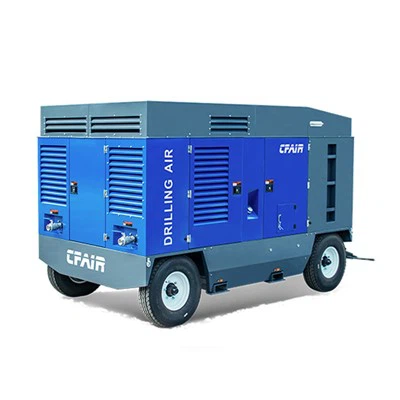
What is the air flow rate of a mobile air compressor?
As a supplier of mobile air compressors, I often encounter questions from customers about the air flow rate of these essential machines. Understanding the air flow rate is crucial for selecting the right mobile air compressor for various applications, whether it's for construction sites, industrial operations, or other tasks that require compressed air.
Defining Air Flow Rate
The air flow rate of a mobile air compressor, also known as the volumetric flow rate, refers to the volume of air that the compressor can deliver within a specific period. It is typically measured in cubic feet per minute (CFM) or liters per minute (LPM). This parameter indicates how much compressed air the compressor can produce, which is a key factor in determining its performance and suitability for different jobs.
Factors Affecting Air Flow Rate
Several factors influence the air flow rate of a mobile air compressor. One of the primary factors is the compressor's displacement. Displacement refers to the volume of air that the compressor's pistons or rotors can move in a single revolution or cycle. A larger displacement generally means a higher air flow rate, as more air can be drawn in and compressed with each cycle.
Another important factor is the compressor's speed. The rotational speed of the compressor's motor or engine affects how quickly the pistons or rotors can move and compress the air. Higher speeds can result in a greater air flow rate, but it's important to note that excessive speed can also lead to increased wear and tear on the compressor components.
The design and efficiency of the compressor also play a role in determining the air flow rate. Compressors with advanced designs and high - efficiency components can convert more of the input power into compressed air, resulting in a higher air flow rate for a given amount of energy consumption.
Environmental conditions can also impact the air flow rate. For example, higher ambient temperatures can cause the air to expand, reducing its density. Since the compressor measures the volume of air, a lower - density air means less mass of air is being compressed, which can result in a lower effective air flow rate. Similarly, high altitude can also affect the air density and thus the air flow rate.
Importance of Air Flow Rate in Different Applications
In construction, the air flow rate is of utmost importance. Many construction tools, such as jackhammers, impact wrenches, and nail guns, rely on compressed air to operate. Compressor In Construction provides more detailed information on how compressors are used in this industry. For a jackhammer, a higher air flow rate is needed to provide the necessary power for breaking through hard materials. If the air flow rate of the compressor is too low, the jackhammer may not operate effectively, leading to slower work progress and increased operator fatigue.
In industrial settings, air flow rate is crucial for powering pneumatic machinery and automation systems. These systems often require a continuous and stable supply of compressed air at a specific flow rate. A compressor with an insufficient air flow rate can cause the machinery to malfunction or operate inefficiently, resulting in production delays and increased costs.
For automotive repair shops, air flow rate is important for running air tools like air ratchets, air sanders, and paint sprayers. Portable Diesel Air Compressors are often used in such settings due to their portability and power. A compressor with the right air flow rate ensures that these tools can perform at their best, providing high - quality results in a timely manner.


Selecting the Right Air Flow Rate for Your Needs
When choosing a mobile air compressor, it's essential to determine the required air flow rate for your specific application. Start by making a list of all the pneumatic tools or equipment that you will be using with the compressor. Check the manufacturer's specifications for each tool to find out the minimum air flow rate required for proper operation.
Add up the air flow requirements of all the tools that you plan to use simultaneously. This will give you an estimate of the total air flow rate needed. It's also a good idea to add a buffer of around 20 - 30% to account for any future expansion or unforeseen increases in air demand.
For example, if you have a jackhammer that requires 10 CFM and a nail gun that requires 2 CFM, and you plan to use them at the same time, you would need a compressor with an air flow rate of at least 12 CFM. Adding a 20% buffer, you should look for a compressor with an air flow rate of around 14.4 CFM.
Our Mobile Air Compressor Offerings
As a supplier, we offer a wide range of mobile air compressors with different air flow rates to meet the diverse needs of our customers. Our Mobile Diesel Compressor models are known for their reliability, durability, and high - performance capabilities.
These compressors are designed with advanced technology to ensure efficient air compression and a consistent air flow rate. Whether you need a small - capacity compressor for light - duty tasks or a large - capacity one for heavy - duty industrial applications, we have the right solution for you.
Our team of experts is always ready to assist you in selecting the right mobile air compressor based on your specific requirements. We can provide detailed information about the air flow rates, power consumption, and other features of our compressors to help you make an informed decision.
Contact Us for Your Compressor Needs
If you're in the market for a mobile air compressor and need to understand more about air flow rates or other aspects of compressor selection, don't hesitate to contact us. We are committed to providing you with the best products and services to meet your compressed air needs. Let's start a conversation about how our mobile air compressors can enhance your operations and improve your productivity.
References
- ASME PTC 9 - 2006, Performance Test Code on Air Compressors and Vacuum Pumps
- Compressed Air and Gas Institute (CAGI) standards for air compressor performance
- Manufacturer's technical manuals for pneumatic tools and mobile air compressors