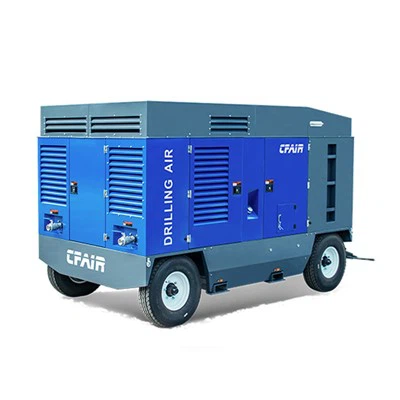
As a supplier of towable air compressors, I've witnessed firsthand the critical role these machines play in various industries, from construction and mining to agriculture and beyond. A reliable towable air compressor can significantly enhance productivity, but like any mechanical equipment, it's susceptible to wear and tear over time. Recognizing the signs of a failing towable air compressor is crucial for preventing costly breakdowns and ensuring continuous operation. In this blog post, I'll share some common indicators that your towable air compressor may be on the verge of failure.
1. Reduced Air Pressure Output
One of the most obvious signs of a failing towable air compressor is a decrease in air pressure output. If you notice that your tools are not performing as efficiently as they used to or if the compressor is struggling to reach and maintain the desired pressure levels, it could be a sign of a problem. This issue can be caused by several factors, including worn-out piston rings, a damaged valve plate, or a clogged air filter.
Worn piston rings can allow compressed air to leak back into the crankcase, reducing the overall pressure output of the compressor. A damaged valve plate can also prevent the proper flow of air in and out of the cylinders, leading to a decrease in pressure. Additionally, a clogged air filter can restrict the airflow into the compressor, causing it to work harder and reducing its efficiency.
2. Excessive Noise and Vibration
Another telltale sign of a failing towable air compressor is excessive noise and vibration during operation. While some level of noise and vibration is normal, an increase in these symptoms can indicate a mechanical problem. Loose or worn components, such as belts, pulleys, or bearings, can cause the compressor to vibrate more than usual. This vibration can not only be annoying but can also lead to further damage to the compressor if left unaddressed.
Excessive noise can also be a sign of internal damage, such as a cracked cylinder head or a damaged piston. These issues can cause the compressor to make unusual knocking, rattling, or hissing sounds. If you notice any abnormal noise or vibration coming from your compressor, it's important to have it inspected by a qualified technician as soon as possible.
3. Oil Leaks
Oil leaks are another common sign of a failing towable air compressor. Oil is essential for lubricating the moving parts of the compressor and preventing wear and tear. However, if you notice oil leaking from the compressor, it could be a sign of a problem. Oil leaks can be caused by several factors, including worn gaskets, seals, or O-rings.
A leaking oil seal can allow oil to escape from the compressor, leading to a loss of lubrication and potential damage to the internal components. Additionally, oil leaks can create a fire hazard if the oil comes into contact with hot surfaces or electrical components. If you notice any oil leaks from your compressor, it's important to have them repaired immediately to prevent further damage.
4. Overheating
Overheating is a serious issue that can cause significant damage to a towable air compressor. If the compressor is running too hot, it can lead to premature wear and tear on the internal components, as well as a decrease in efficiency. Overheating can be caused by several factors, including a lack of proper ventilation, a clogged radiator, or a malfunctioning cooling system.
A lack of proper ventilation can prevent the compressor from dissipating heat effectively, causing it to overheat. A clogged radiator can also restrict the airflow through the cooling system, leading to an increase in temperature. Additionally, a malfunctioning cooling system, such as a faulty fan or water pump, can prevent the compressor from being cooled properly.
5. Frequent Tripping of the Circuit Breaker
If your towable air compressor is frequently tripping the circuit breaker, it could be a sign of an electrical problem. A tripped circuit breaker indicates that the compressor is drawing more current than the circuit can handle. This can be caused by several factors, including a short circuit, a damaged motor, or a faulty capacitor.
A short circuit can occur when the electrical wiring in the compressor is damaged or frayed, causing a direct connection between the positive and negative terminals. A damaged motor can also draw more current than normal, leading to a tripped circuit breaker. Additionally, a faulty capacitor can cause the motor to run inefficiently, drawing more current and tripping the circuit breaker.
6. Poor Performance of Compressed Air Tools
If you notice that your compressed air tools are not performing as well as they used to, it could be a sign of a problem with the towable air compressor. Compressed air tools rely on a consistent supply of clean, dry air to operate efficiently. If the compressor is not producing enough air or if the air is contaminated with moisture or oil, it can affect the performance of the tools.
Moisture in the compressed air can cause corrosion and damage to the internal components of the tools, leading to reduced performance and a shorter lifespan. Oil in the compressed air can also contaminate the tools, causing them to malfunction or break down. Additionally, if the compressor is not producing enough air, the tools may not have enough power to operate properly.


7. Increased Energy Consumption
A failing towable air compressor may also consume more energy than normal. If you notice an increase in your energy bills or if the compressor seems to be running for longer periods of time to achieve the same results, it could be a sign of a problem. This can be caused by several factors, including a decrease in efficiency, a leak in the air system, or a malfunctioning motor.
A decrease in efficiency can occur when the compressor is not operating at its optimal level, such as when it is overheating or when the air filter is clogged. A leak in the air system can also cause the compressor to work harder to maintain the desired pressure levels, leading to increased energy consumption. Additionally, a malfunctioning motor can draw more current than normal, causing the compressor to use more energy.
Conclusion
Recognizing the signs of a failing towable air compressor is essential for preventing costly breakdowns and ensuring continuous operation. By paying attention to the symptoms mentioned above, you can identify potential problems early and take the necessary steps to address them. If you notice any of these signs, it's important to have your compressor inspected by a qualified technician as soon as possible.
At our company, we offer a wide range of Towable Portable Air Compressor that are designed to meet the needs of various industries. Our Air Compressor Engine Driven and Portable Diesel Air Compressors are built to last and provide reliable performance. If you're in the market for a new towable air compressor or need assistance with maintenance and repair, please don't hesitate to contact us. We're here to help you find the right solution for your needs.
References
- Compressed Air and Gas Institute (CAGI). (n.d.). Air Compressor Maintenance and Troubleshooting Guide.
- Quincy Compressor. (n.d.). Signs of a Failing Air Compressor.
- Ingersoll Rand. (n.d.). Troubleshooting Your Air Compressor.