Hey there! As a supplier of large air compressors, I've had my fair share of dealing with different types of compressors. One of the most common questions I get asked is about the differences between reciprocating and rotary large air compressors. So, I thought I'd write this blog to break it all down for you.


How They Work
Let's start with how these two types of compressors work. Reciprocating air compressors are like the old - school workhorses. They use a piston inside a cylinder, kind of like in a car engine. The piston moves up and down. When it moves down, it creates a vacuum that sucks air into the cylinder. Then, when it moves up, it compresses that air. This process happens in cycles, and usually, large reciprocating compressors have multiple cylinders to increase the compression capacity.
On the other hand, rotary air compressors work in a more continuous way. There are different types of rotary compressors, but the most common ones use two rotors that spin against each other. As the rotors turn, they trap air between them and the compressor housing. Then, as the rotors continue to spin, the volume of the trapped air decreases, which compresses the air. This continuous operation is a big difference compared to the cyclic operation of reciprocating compressors.
Performance and Efficiency
In terms of performance, reciprocating compressors are great for applications that need high - pressure air. They can achieve very high pressures, sometimes up to 5000 psi or more. This makes them ideal for things like industrial processes that require a lot of force, such as in some manufacturing plants where they're used for powering heavy - duty pneumatic tools.
However, reciprocating compressors aren't the most energy - efficient option. The up - and - down motion of the pistons creates a lot of vibration and mechanical stress. This means they need more energy to operate, and they also require more maintenance. You've got to keep an eye on things like the piston rings, valves, and gaskets, which can wear out over time.
Rotary compressors, on the other hand, are more energy - efficient. Their continuous operation reduces vibration and mechanical stress. They can also deliver a more consistent flow of compressed air. This makes them a better choice for applications that need a steady supply of compressed air, like in a painting booth where you need a constant stream of air to atomize the paint. But they usually can't reach the same high pressures as reciprocating compressors. Most rotary compressors top out at around 150 - 200 psi.
Size and Portability
When it comes to size, reciprocating compressors tend to be bulkier. The pistons, cylinders, and the associated valves and piping take up a lot of space. This makes them less portable, especially the large - scale ones. They're usually installed in a fixed location in an industrial facility.
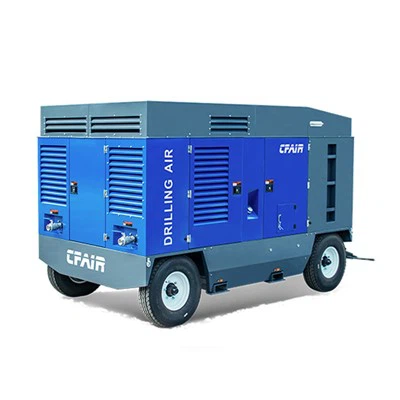
Rotary compressors, especially the screw - type ones, are more compact. They have a simpler design with fewer moving parts, which allows for a more streamlined construction. This makes them a great option if you need a Portable Screw Compressor. You can easily move them around a job site or transport them to different locations.
Noise Level
Noise is another important factor. Reciprocating compressors are quite noisy. The pounding of the pistons and the operation of the valves create a lot of racket. If you're using a reciprocating compressor in a workplace, you might need to invest in sound - proofing or have workers wear ear protection.
Rotary compressors are generally quieter. Their smooth, continuous operation produces less noise. This is a big advantage in environments where noise is a concern, like in a hospital or an office building where you might be using a compressor for some light - duty pneumatic applications.
Applications
Reciprocating compressors are commonly used in industries where high - pressure air is a must. For example, in the oil and gas industry, they're used for well - head gas compression. They're also used in the construction industry for things like powering jackhammers and other heavy - duty Compressor Machine for Construction.
Rotary compressors are widely used in applications that need a continuous and stable supply of compressed air. In the food and beverage industry, they're used for packaging and bottling processes. They're also popular in the automotive industry for painting and sandblasting. If you're into blasting operations, a Compressor for Blasting is often a rotary type because of its consistent air flow.
Maintenance
Maintenance is a key consideration when choosing between these two types of compressors. Reciprocating compressors need more frequent maintenance. As I mentioned earlier, the pistons, valves, and gaskets can wear out, and they need to be replaced regularly. You also have to check the lubrication system to make sure the pistons are properly lubricated.
Rotary compressors have fewer moving parts, which means less maintenance. However, they still need some attention. The rotors need to be kept clean and properly aligned, and the oil in oil - flooded rotary compressors needs to be changed at regular intervals.
Cost
The initial cost of a reciprocating compressor is usually lower than that of a rotary compressor. But when you factor in the long - term costs, including energy consumption and maintenance, the picture can change. Rotary compressors might cost more upfront, but their energy efficiency and lower maintenance requirements can save you money in the long run.
Which One Should You Choose?
So, which type of compressor is right for you? Well, it depends on your specific needs. If you need high - pressure air for heavy - duty applications and don't mind the noise and higher maintenance, a reciprocating compressor might be the way to go. But if you need a continuous, stable supply of compressed air, energy efficiency, and portability, then a rotary compressor is probably a better choice.
As a supplier of large air compressors, I've helped many customers make this decision. I can assess your requirements and recommend the best compressor for your situation. Whether you're running a small workshop or a large industrial plant, I've got the expertise to find the right fit for you.
If you're interested in learning more about our large air compressors or want to discuss your specific needs, don't hesitate to reach out. We can have a detailed chat about your application, budget, and any other concerns you might have. Making the right choice of air compressor can make a big difference in your operations, so let's work together to find the perfect solution for you.
References
- ASME Pressure Vessel and Piping Codes
- Compressed Air and Gas Institute (CAGI) Standards
- Manufacturer's technical manuals for reciprocating and rotary air compressors