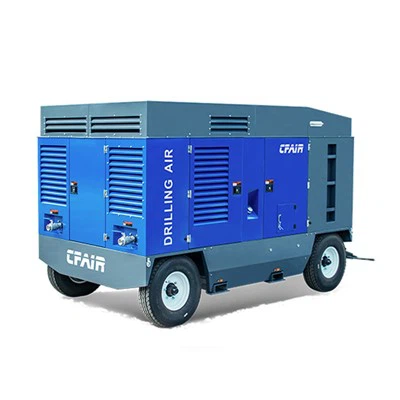
How long does it take to fill a tire with a portable air compressor? This is a question that many of our customers, especially those who are new to using portable air compressors, often ask. As a leading supplier of Air Compressors Portable, we understand the importance of providing accurate information to help you make the most of our products. In this blog post, we'll delve into the factors that influence the time it takes to fill a tire, and offer some practical tips to speed up the process.
Understanding the Basics
Before we can determine how long it takes to fill a tire, it's essential to understand the basic principles at work. A portable air compressor works by drawing in air, compressing it, and then delivering it to the tire through a hose and nozzle. The rate at which the compressor can fill the tire depends on several factors, including the compressor's capacity, the tire's size, and the initial and desired air pressure.
Factors Affecting Filling Time
- Compressor Capacity: The capacity of a portable air compressor is typically measured in cubic feet per minute (CFM) or liters per minute (LPM). This measurement indicates how much air the compressor can deliver in a given time. A higher CFM or LPM rating means the compressor can fill the tire more quickly. For example, a compressor with a CFM rating of 3 can deliver more air per minute than one with a CFM rating of 1. If you're looking for a high - capacity compressor, you might be interested in our Biggest Portable Air Compressor.
- Tire Size: Larger tires require more air to reach the recommended pressure. A compact car tire will take less time to fill compared to a large SUV or truck tire. For instance, a standard passenger car tire may have a volume of around 1 - 2 cubic feet, while a large truck tire can have a volume of 5 - 10 cubic feet or more.
- Initial and Desired Pressure: The difference between the initial air pressure in the tire and the desired pressure also affects the filling time. If a tire is completely flat, it will take longer to fill than one that only needs a small amount of additional air. For example, if a tire's recommended pressure is 32 psi and it currently has 20 psi, the compressor only needs to add enough air to increase the pressure by 12 psi. However, if the tire is flat (0 psi), the compressor has to fill it up to 32 psi.
Calculating Filling Time
While it's difficult to give an exact time for filling a tire, we can provide a rough estimate using some basic calculations. First, you need to know the volume of the tire and the compressor's CFM rating.
The volume of a tire can be estimated using the following formula (for a simple approximation):
[V=\pi\times r^{2}\times h]
where (r) is the radius of the tire's cross - section and (h) is the width of the tire.
Once you have the volume ((V)) in cubic feet and the compressor's CFM rating ((C)), you can calculate the approximate time ((t)) in minutes to fill the tire using the formula:
[t=\frac{V\times(P_{2}-P_{1})}{C}]
where (P_{1}) is the initial pressure and (P_{2}) is the desired pressure.
For example, let's assume we have a tire with a volume of 1.5 cubic feet, an initial pressure of 20 psi, a desired pressure of 32 psi, and a compressor with a CFM rating of 2.
[t=\frac{1.5\times(32 - 20)}{2}=\frac{1.5\times12}{2}=9] minutes


Keep in mind that this is a simplified calculation and actual filling times may vary due to factors such as hose length, nozzle restrictions, and the compressor's efficiency.
Tips to Speed Up the Filling Process
- Choose the Right Compressor: Select a compressor with a higher CFM rating if you frequently need to fill large tires or want to save time. Our Diesel Screw Air Compressor is a powerful option that offers high - volume air delivery.
- Keep the Compressor in Good Condition: Regular maintenance, such as cleaning the air filter and checking the oil level (if applicable), can ensure the compressor operates at its maximum efficiency. A well - maintained compressor will deliver air more consistently and quickly.
- Use a Shorter Hose: A shorter hose reduces the distance the compressed air has to travel, minimizing pressure loss. This can result in a faster filling time.
- Check the Tire Valve: Make sure the tire valve is clean and free of debris. A clogged valve can restrict the flow of air into the tire, increasing the filling time.
Special Applications and Compressors
In addition to filling tires, portable air compressors have many other applications. One such application is sandblasting. For sandblasting projects, you need a compressor with specific characteristics. Our Compressor for Sandblasting is designed to meet the high - volume air requirements of sandblasting operations. This compressor can deliver a large amount of air at a consistent pressure, ensuring efficient sandblasting.
Conclusion
The time it takes to fill a tire with a portable air compressor depends on multiple factors, including compressor capacity, tire size, and the difference between initial and desired pressure. By understanding these factors and following our tips, you can make the filling process more efficient.
If you're in the market for a portable air compressor, whether it's for tire filling, sandblasting, or other applications, we're here to help. Our wide range of products offers solutions for different needs and budgets. We invite you to contact us for more information and to discuss your specific requirements. We look forward to assisting you in finding the perfect portable air compressor for your needs.
References
- Automotive Tire Handbook, Rubber Manufacturers Association
- Compressed Air Systems: Principles and Applications, by Allan R. Budris