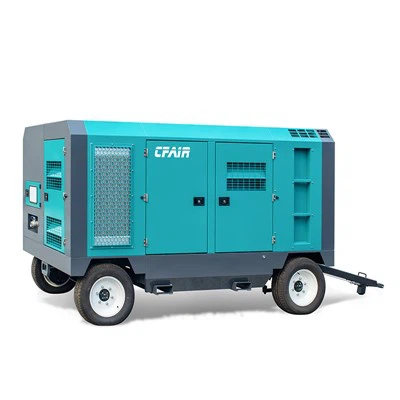
Diesel screw compressors are the powerhouses of productivity in remote areas, construction sites, drilling rigs, and mining areas. These machines are highly regarded for their mobility, independence from the power grid, and adaptability to harsh environments. However, with all the attention paid to output flow, pressure ratings, and fuel efficiency, one critical maintenance procedure is often overlooked: daily draining of condensate.
In the air compressor industry, we have encountered too many users who experienced performance issues, only to find that the root cause was weeks or even months of neglect to drain. We will take a deep dive into why draining a diesel screw compressor is not just a suggestion, but a necessity.

Ⅰ. Why does water accumulate inside a diesel screw compressor?
1. Moisture: An invisible contaminant
Ambient air always contains a certain concentration of water vapor. When your diesel screw compressor draws in and compresses air, the pressure increases and the temperature soars. This hot and high-pressure air then enters cooler components such as air receivers (air tanks), where the rapid drop in temperature causes the water in vapor form to condense into liquid.
Factors that increase moisture content in incoming air include:
Tropical or coastal environments with high relative humidity
Rainy or monsoonal periods
Cold weather conditions where outside temperatures exacerbate condensation on contact with cooler system surfaces.
2. Air receivers: Your first line of defense
The air receiver does more than just store compressed air; it is the first line of defense for moisture separation. As compressed air flows into the air receiver, it slows down and cools. The sudden drop in temperature forces water vapor to condense, forming liquid water (condensate) that settles at the bottom of the air receiver. However, this water will not go away unless you drain it manually or through an automatic drain system.
Ⅱ. What happens if you don't drain it?
Ignoring the discharge of condensate may seem harmless in the short term, but its effects can snowball into multiple system failures.
1. Reduced air quality
Compressed air containing water can cause corrosion in downstream piping and tools.
In processes such as sandblasting, painting, and powder coating, moisture in the air can cause surface defects.
Precision pneumatic tools can rust, seize or misfire, resulting in poor process or system downtime.
2. Damage to internal components
Corrosion inside air tanks, coolers and oil-air separators can reduce structural integrity.
Water intrusion can cause lubricating oils to emulsify, severely reducing their ability to protect rotating parts.
Elevated humidity causes the differential pressure across the oil-air separator to rise, reducing its separation efficiency and creating a risk of oil carryover.
Electronic sensors and solenoid valves in modern diesel compressors can malfunction in high humidity.
In short: water can damage your air compressor from the inside out.
Ⅲ. How to properly drain condensate from a diesel screw compressor
Daily draining steps:
1. Turn off the power to the diesel compressor.
2. Find the manual drain valve at the bottom of the air tank.
3. Slowly open the valve to drain any accumulated condensate.
4. Observe the appearance and smell of the drained liquid. If the liquid is dark or has an odor, it may indicate that the lubricant is contaminated.
5. Close the valve firmly to avoid leaks or re-contamination.
⚠ Tip: Always wear gloves and goggles when draining, especially in cold climates or after long periods of operation.
Ⅳ. Adjust the draining frequency according to the environment
1. High humidity areas
In areas with high air humidity, such as near coastlines or during rainy seasons, condensate can accumulate quickly. In this case:
Drain twice a day - once before use and once after shutdown.
Install an additional pre-filter or refrigerated air dryer to enhance the dehumidification effect.
2. Cold climates
In freezing temperatures, condensate can freeze in the drain pipe, causing blockage or component damage:
Make sure to drain immediately after shutdown, while the internal temperature is still high.
Use heated drains, antifreeze lubricants, or install insulation around the drain valve to prevent ice.
Always check manual and automatic drain valves for signs of blockage or ice.
V. Why diesel compressors require special attention
Electric air compressors typically operate in a controlled environment, while diesel screw air compressors are designed for rugged and mobile deployment. This presents some unique challenges:
1.Exposure to outdoor weather (rain, dust, extreme cold or heat)
2.Limited aftertreatment options in remote areas
3.High vibration levels can loosen fittings and deform separators
4.Increased risk of oil-water mixing due to system temperature fluctuations
5.The reliability and service life of a diesel air compressor depends heavily on regularly draining condensate.
VI. Real Case Study: What happens when you neglect to drain
Client Profile: A construction company that used a diesel screw compressor on a bridge reconstruction project.
Reported Problem: Reduced air pressure, inefficient tool.
Inspection Results:
More than 5 liters of condensate accumulated in air tank
Pressure drop across oil/gas separator exceeds safety limit
Severe emulsification of lubricating oil
Incipient corrosion of internal cooler
Root Cause: No draining for three weeks.
Result: 3 days of downtime and over $3,000 in parts replacement costs.
VII. Maintenance Program and Daily Checklist
Recommended Maintenance Schedule:
|
Item |
Frequency |
Action |
|
Drain air receiver tank |
Daily |
Open manual drain valve before and after operation |
|
Check oil level |
Daily |
Inspect sight glass or dipstick |
|
Inspect oil-water separator |
Weekly |
Check for clogging, corrosion, or saturation |
|
Observe condensate color |
Daily |
Detect potential oil contamination |
Best Practice: Post this checklist on a laminated poster near your compressor unit to encourage compliance.
VIII. Conclusion: One Minute of Prevention vs. Hours of Repair
Opening the valve for just 30 to 60 seconds a day can save thousands of dollars in repairs, prevent operational delays, and ensure clean, dry, reliable compressed air delivery.
"A drop of water may seem harmless, but if placed in the wrong place, it can bring an entire operation to a halt."
CFAIR strongly recommends incorporating daily draining into your diesel air compressor's standard operating procedure. Train your staff, set visual reminders, and make sure someone is responsible. Maintenance discipline increases equipment resilience.
Need Help?
If you're unsure if your diesel compressor is draining properly, or you notice signs of excessive moisture in your air lines, contact CFAIR's technical support team. Our experts can help you assess site needs, recommend drain system upgrades, and optimize your preventive maintenance program.